


A closer look at grass
03/06/2026
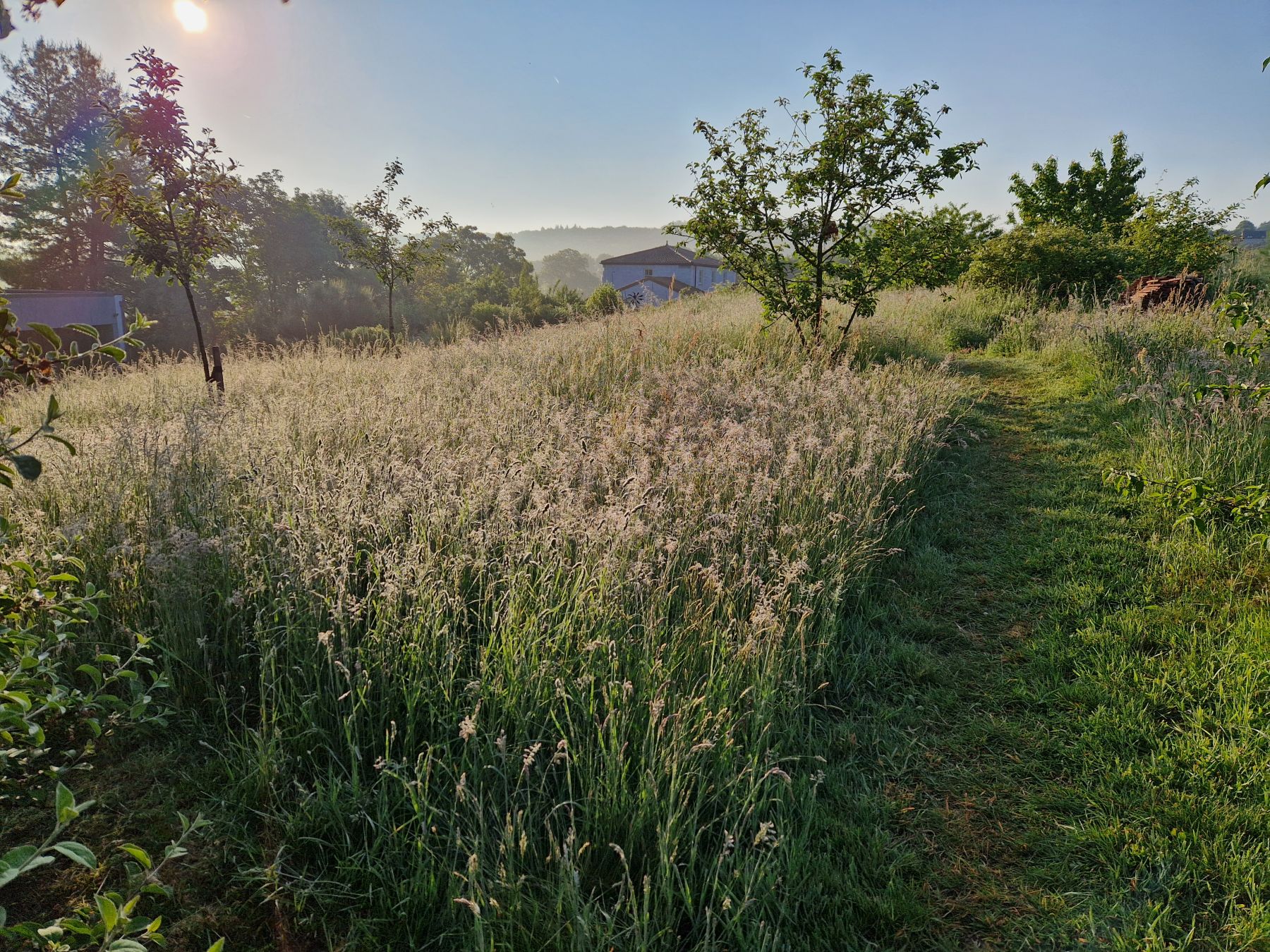
After a rainy period, and then great heat and thunderstorms, it is the time of year again when the grass starts growing above us. To mow or not to mow, that is the dilemma. The 'No Mow May' campaign is just behind us, so maybe this is the time to take a closer look at the grass.
In many gardens, grass plays a starring role. In some gardens grass shares the stage with shrubs, trees and perennials, in others it gets only a minor supporting role between borders, hedge and patio. But grass is never just grass. There are thousands of varieties of grass. And behind every blade there is an identity.
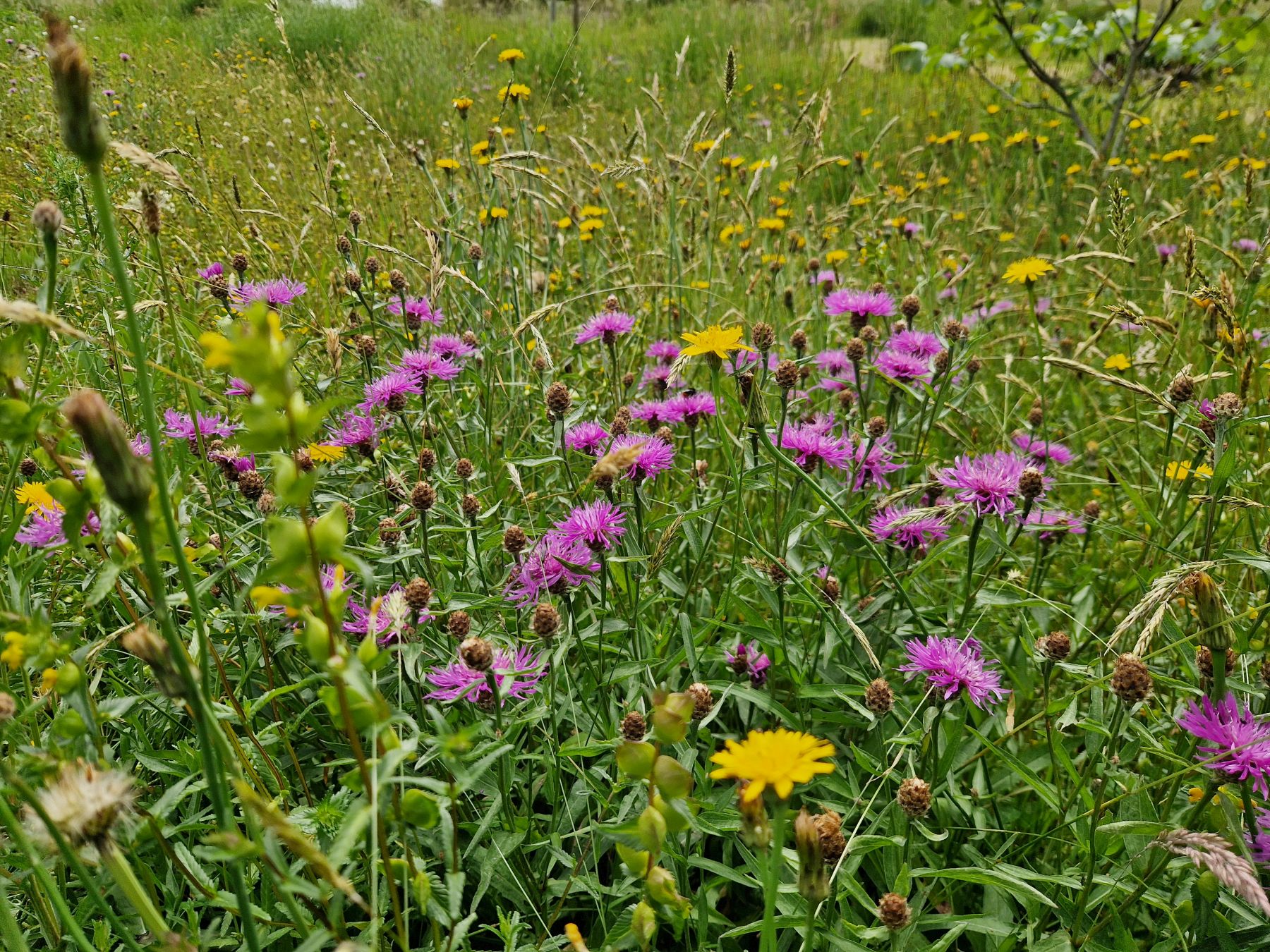
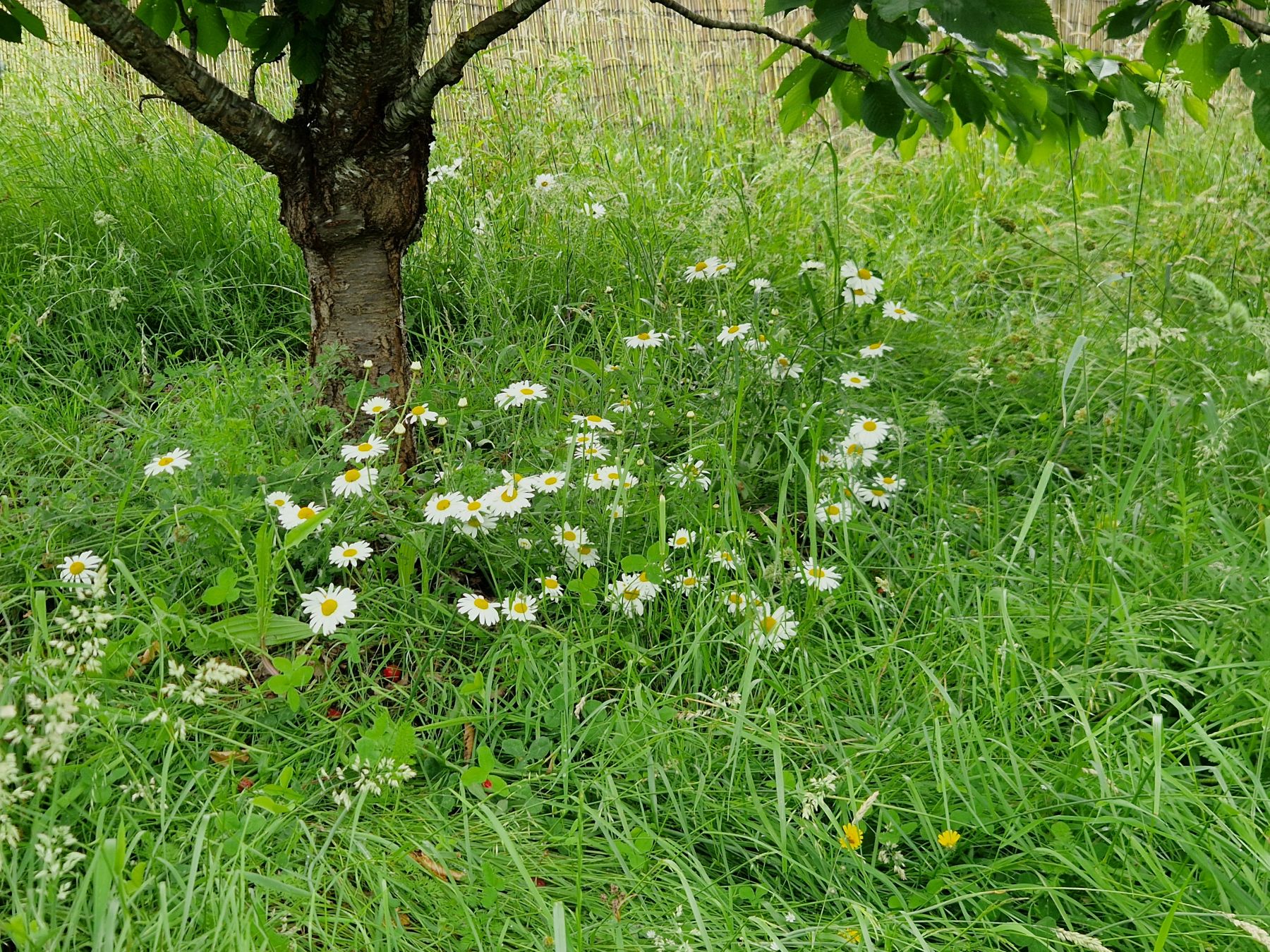
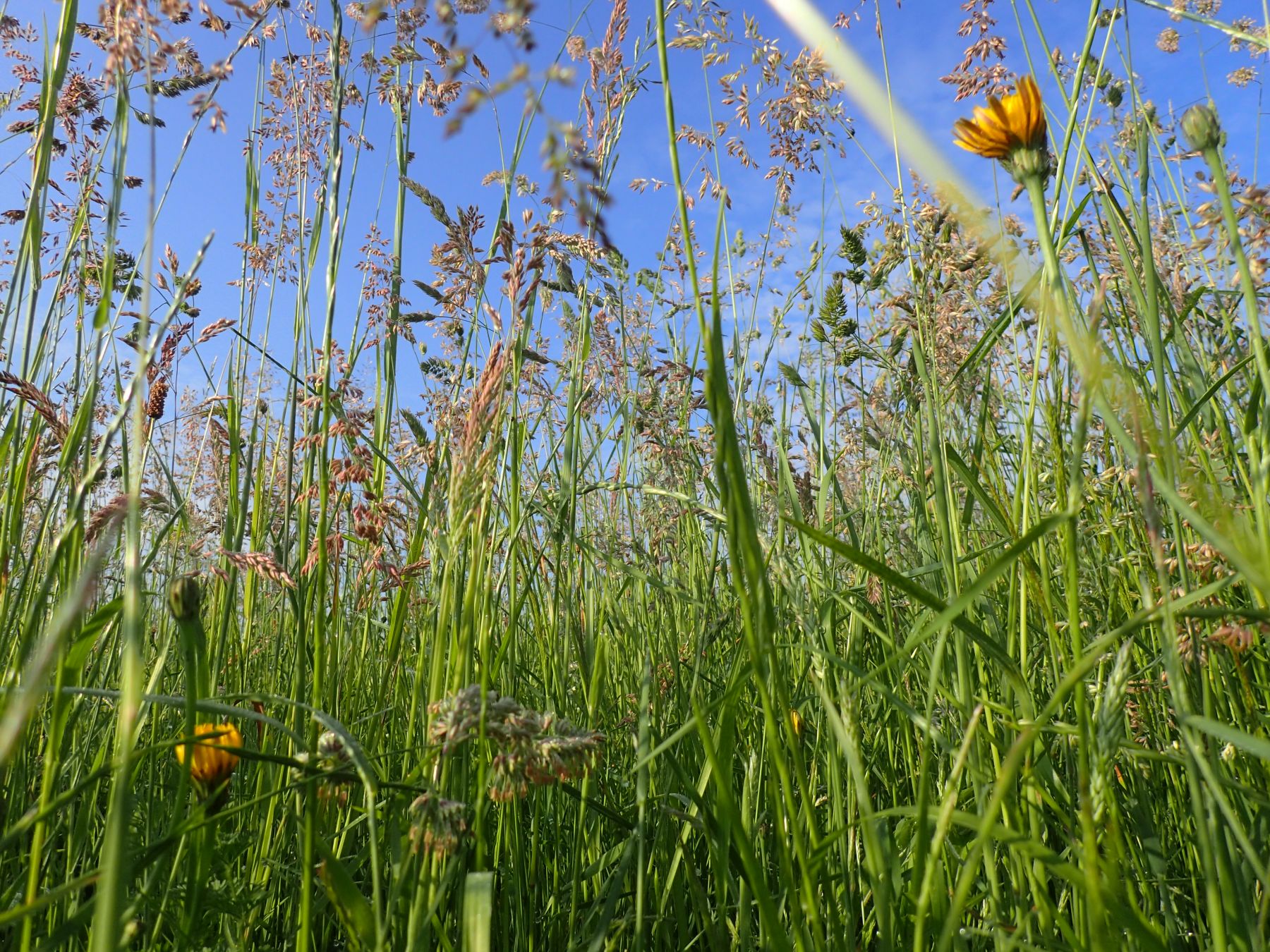
I am by no means an expert - it is not an obvious subject - but anyone who loves wild flowers and natural gardens will soon realise that it pays to get to know grasses better. Some species are light and open in structure. They allow sunlight to penetrate to the soil so that daisies, knapweed, scabious and other wildflowers have a chance. Think of sweet vernal grass(1), bentgrass or fescue, rather modest types that stay low and co-exist well with other plants. If you already have these in your garden, then a flower meadow is certainly within the realms of possibility.
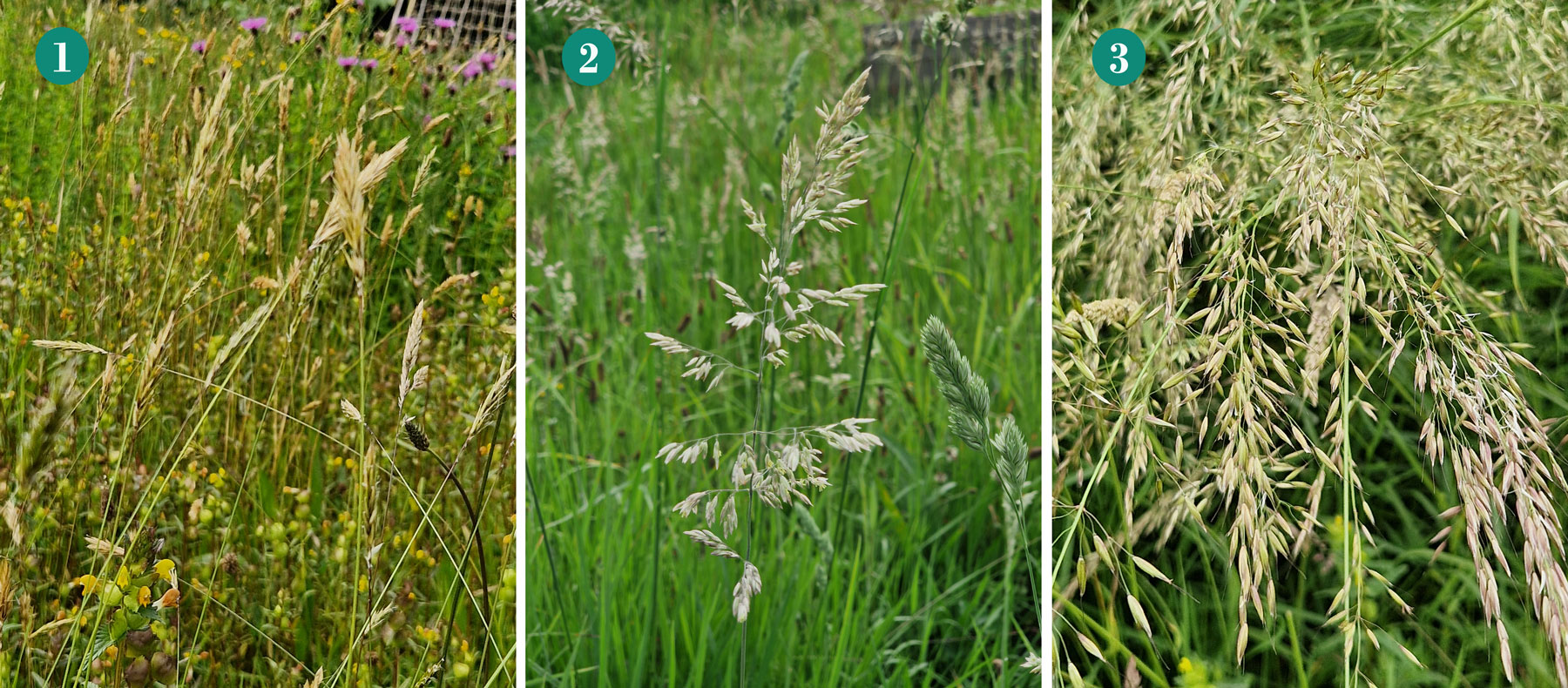
In addition, you also have the dominant players - common velvet grass whitebell(2), tall oatgrass(3) and foxtail - they are real powerhouses. They are the 'fat' grasses that quickly take up a lot of space, grow tall and crowd out other species. Then you get zones with only these grasses and little diversity. Here you need to mow in time to break this dominance, late May - early June before they drop their seeds or the next generation is already there. Often it is also best to mow them before they fall flat due to thunderstorms or heavy rain which makes mowing a bit more difficult.
For lovers of a tight lawn, English ryegrass(4), smooth meadow grass, red and sheep fescue are the main choices. One by one species that are sturdy, dense growing, tolerate treading and high mowing pressure and recover well. In a natural garden, short lawn is mainly functional for playing, dining or walking on. A tight lawn with hardly any flowers is a desert for insects as there is nothing for them to eat here.
And then there are the almost indestructible grasses. Couch grass, for example. It behaves like an underground guerrilla movement. If you pull it, it breaks off and grows happily on. Barnyard grass also likes to pop up wherever the soil is open and warm. In young plantings and vegetable gardens, this species can spoil the fun. Also cocksfoot(5) is a substantial, sturdy grass that overshadows other species. I personally find brome grasses very pretty grasses but their spikelets have tiny barbs and can be dangerous to our pets, so better avoided in gardens.
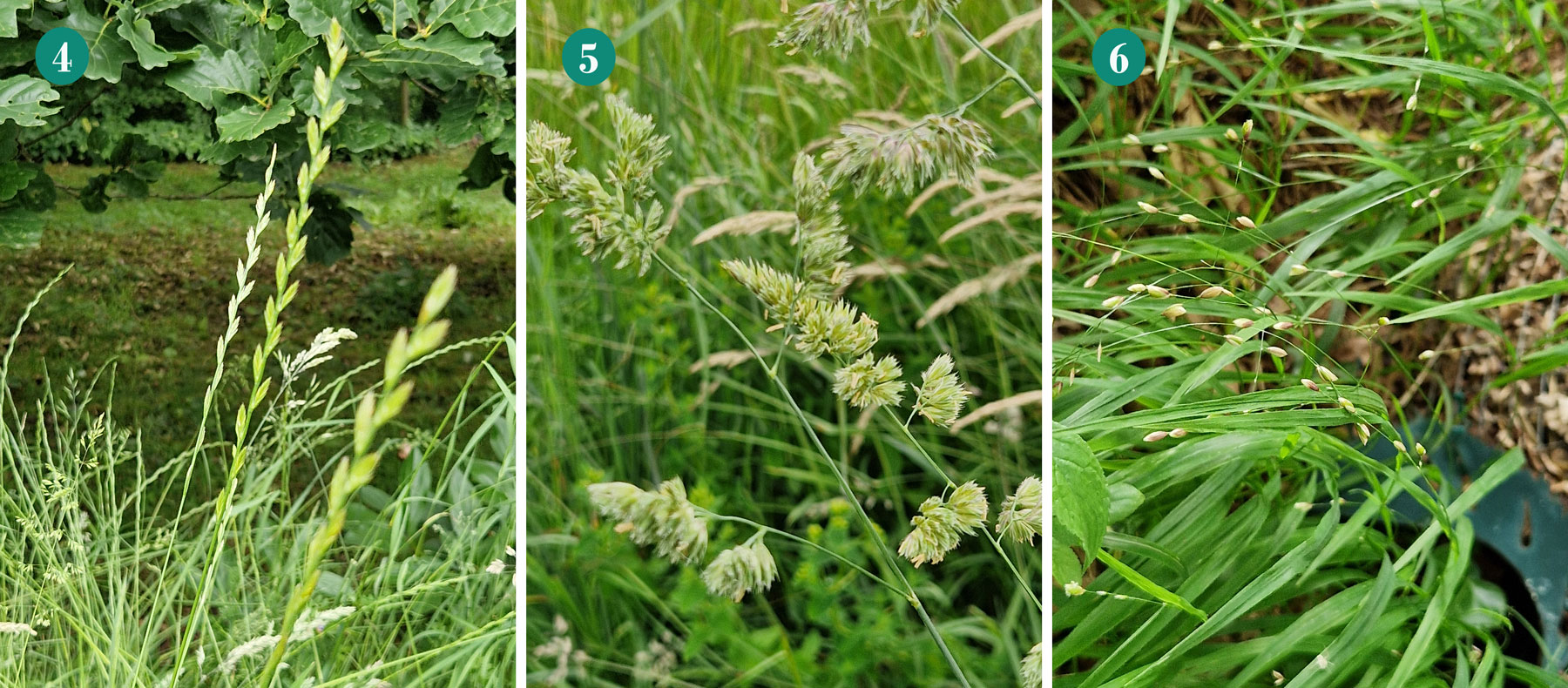
Happily, there are also splendid grasses. Quaking grass, for example, with its delicate trilling spike shapes, they almost look like gems in the summer wind. Wood melick(6) in the shade is also elegant and refined. And as if things weren't complicated enough, there are also false grasses. Plants that look like grass, behave like grass, but are not grass. For example, sedges and rushes. Soft rush is familiar from wet meadows, rushes at the water's edge or the hanging sedge with its graceful spikes. Of course, there are also plenty of exotic ornamental grasses, but in natural gardens these are less commonly used because they are less valuable for biodiversity.
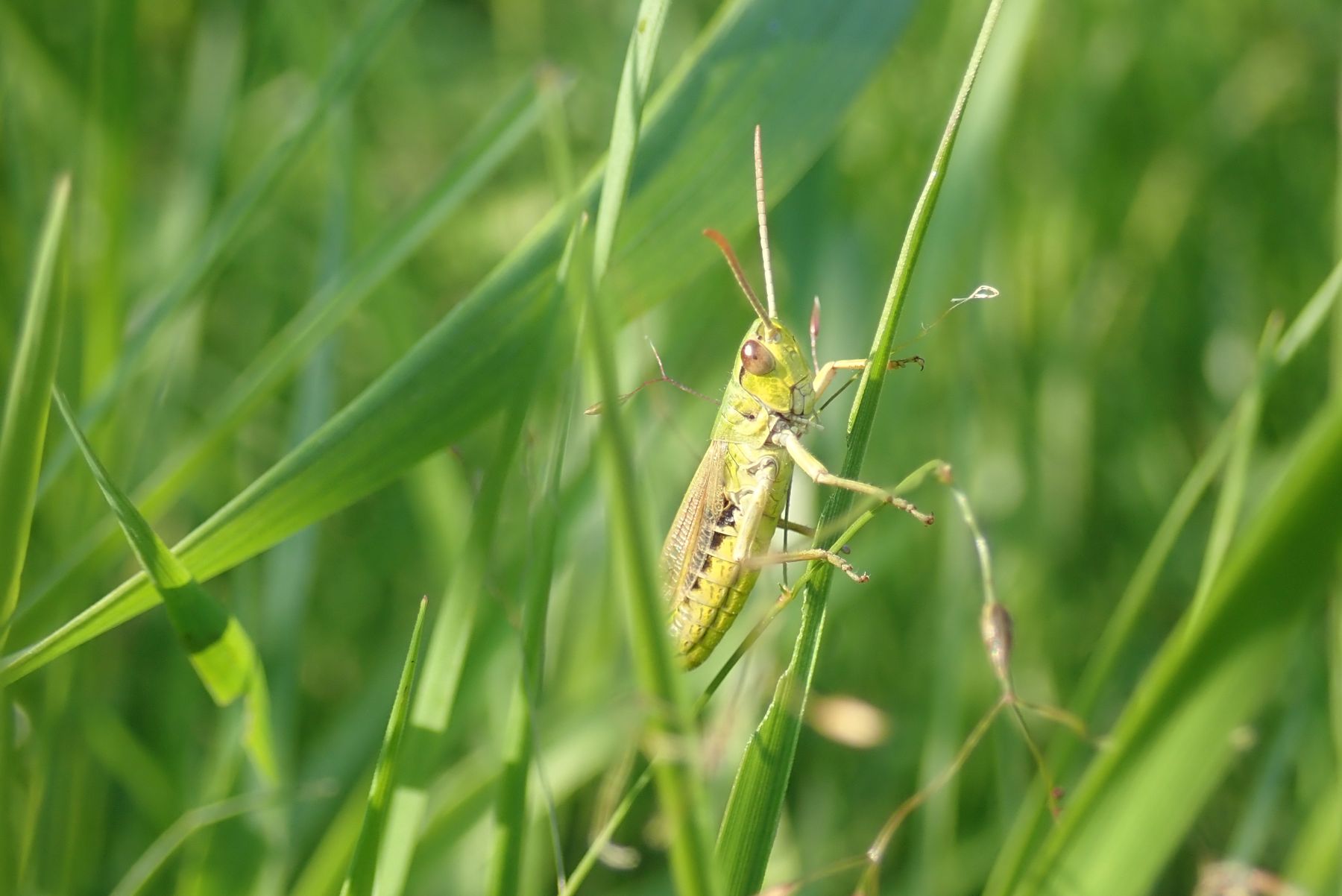
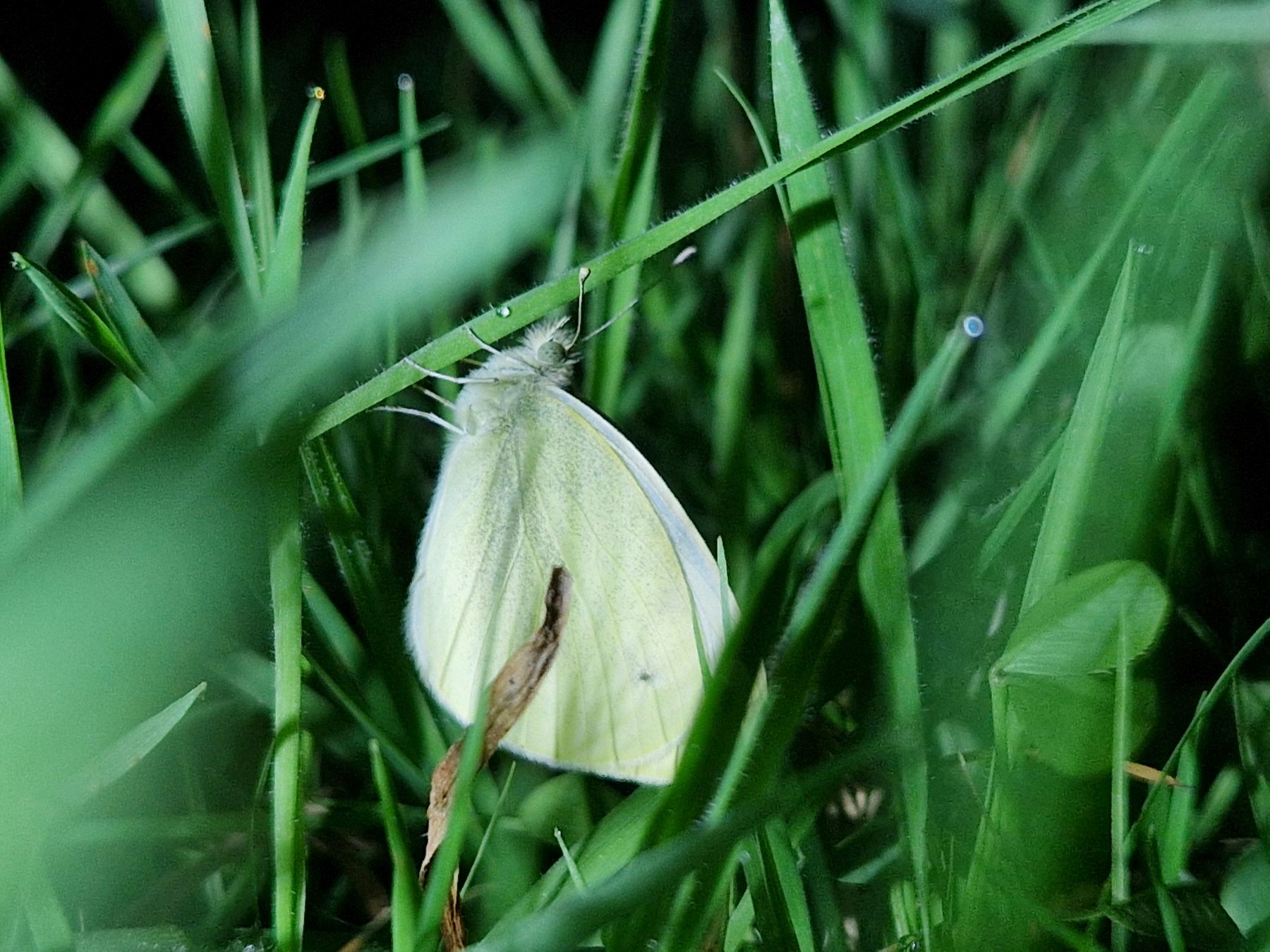
Grasses are valuable in a natural garden; they link everything together. They provide an ideal shelter for insects that hibernate in them. Grass seeds are important food for birds. Many grasses are also host plants for various butterflies, moths and beetles that deposit their eggs on them and whose caterpillars eat grass. Think of the meadow brown, skippers, but also grasshoppers. Aphids are also madd about grass sap. In turn, spiders, ground beetles and predatory bugs depend on grass structures as hunting grounds.
In a natural garden, varied mowing management is most valuable, also called a mosaic or patchwork approach. You combine various 'grass' biotopes in your garden, so to speak:
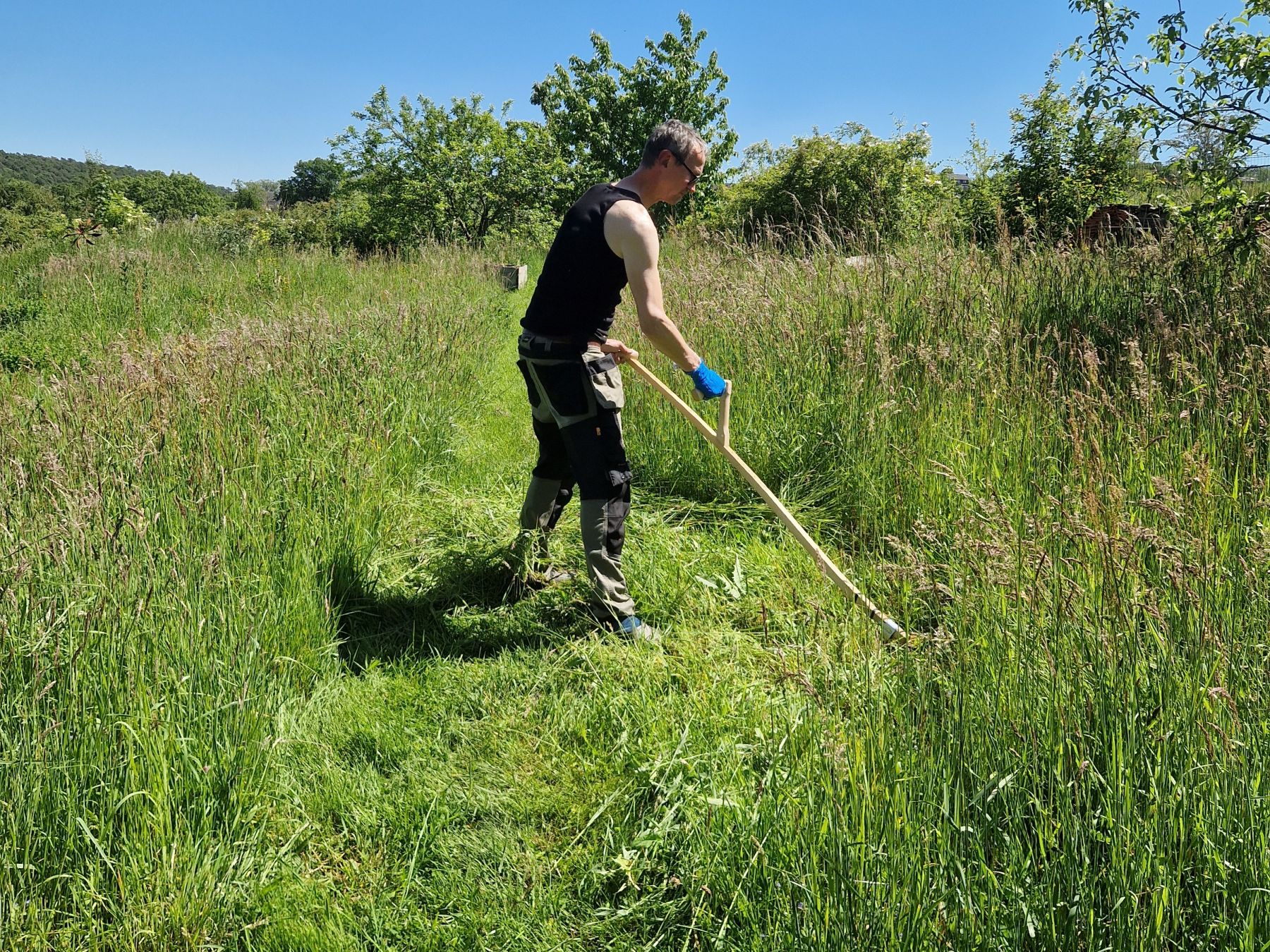
The most important thing when mowing is to remove the clippings, as this way you impoverish the soil which then gives more opportunity for flowers among the grasses and less dominant grasses in time. It is also best never to mow off everything at once in your garden because then your insects will no longer find food and shelter, so the rule is always to leave a zone of flowers and long grass somewhere, ideally 20%.
So mow or don't mow? Perhaps that is ultimately the lesson of grass: management makes all the difference. Not cutting everything short, but also not letting everything just happen. Occasional mowing, removing clippings and observing what appears spontaneously often brings more life to the garden than any perfect green carpet. Those who learn to observe will look at grass differently. No longer one big green mass, but a biotope full of character, subtle beauties and, above all, lots of life.
In many gardens, grass plays a starring role. In some gardens grass shares the stage with shrubs, trees and perennials, in others it gets only a minor supporting role between borders, hedge and patio. But grass is never just grass. There are thousands of varieties of grass. And behind every blade there is an identity.
I am by no means an expert - it is not an obvious subject - but anyone who loves wild flowers and natural gardens will soon realise that it pays to get to know grasses better. Some species are light and open in structure. They allow sunlight to penetrate to the soil so that daisies, knapweed, scabious and other wildflowers have a chance. Think of sweet vernal grass(1), bentgrass or fescue, rather modest types that stay low and co-exist well with other plants. If you already have these in your garden, then a flower meadow is certainly within the realms of possibility.
In addition, you also have the dominant players - common velvet grass whitebell(2), tall oatgrass(3) and foxtail - they are real powerhouses. They are the 'fat' grasses that quickly take up a lot of space, grow tall and crowd out other species. Then you get zones with only these grasses and little diversity. Here you need to mow in time to break this dominance, late May - early June before they drop their seeds or the next generation is already there. Often it is also best to mow them before they fall flat due to thunderstorms or heavy rain which makes mowing a bit more difficult.
For lovers of a tight lawn, English ryegrass(4), smooth meadow grass, red and sheep fescue are the main choices. One by one species that are sturdy, dense growing, tolerate treading and high mowing pressure and recover well. In a natural garden, short lawn is mainly functional for playing, dining or walking on. A tight lawn with hardly any flowers is a desert for insects as there is nothing for them to eat here.
And then there are the almost indestructible grasses. Couch grass, for example. It behaves like an underground guerrilla movement. If you pull it, it breaks off and grows happily on. Barnyard grass also likes to pop up wherever the soil is open and warm. In young plantings and vegetable gardens, this species can spoil the fun. Also cocksfoot(5) is a substantial, sturdy grass that overshadows other species. I personally find brome grasses very pretty grasses but their spikelets have tiny barbs and can be dangerous to our pets, so better avoided in gardens.
Happily, there are also splendid grasses. Quaking grass, for example, with its delicate trilling spike shapes, they almost look like gems in the summer wind. Wood melick(6) in the shade is also elegant and refined. And as if things weren't complicated enough, there are also false grasses. Plants that look like grass, behave like grass, but are not grass. For example, sedges and rushes. Soft rush is familiar from wet meadows, rushes at the water's edge or the hanging sedge with its graceful spikes. Of course, there are also plenty of exotic ornamental grasses, but in natural gardens these are less commonly used because they are less valuable for biodiversity.
Grasses are valuable in a natural garden; they link everything together. They provide an ideal shelter for insects that hibernate in them. Grass seeds are important food for birds. Many grasses are also host plants for various butterflies, moths and beetles that deposit their eggs on them and whose caterpillars eat grass. Think of the meadow brown, skippers, but also grasshoppers. Aphids are also madd about grass sap. In turn, spiders, ground beetles and predatory bugs depend on grass structures as hunting grounds.
In a natural garden, varied mowing management is most valuable, also called a mosaic or patchwork approach. You combine various 'grass' biotopes in your garden, so to speak:
- a short lawn with some clovers and daisies that you mow regularly (every 1-2 weeks), often functionally and close to home
- slightly longer grass (10-20cm) with clovers, common selfheal and ribwort plantain that you mow occasionally (every 3-6 weeks), as strips or borders along the lawn
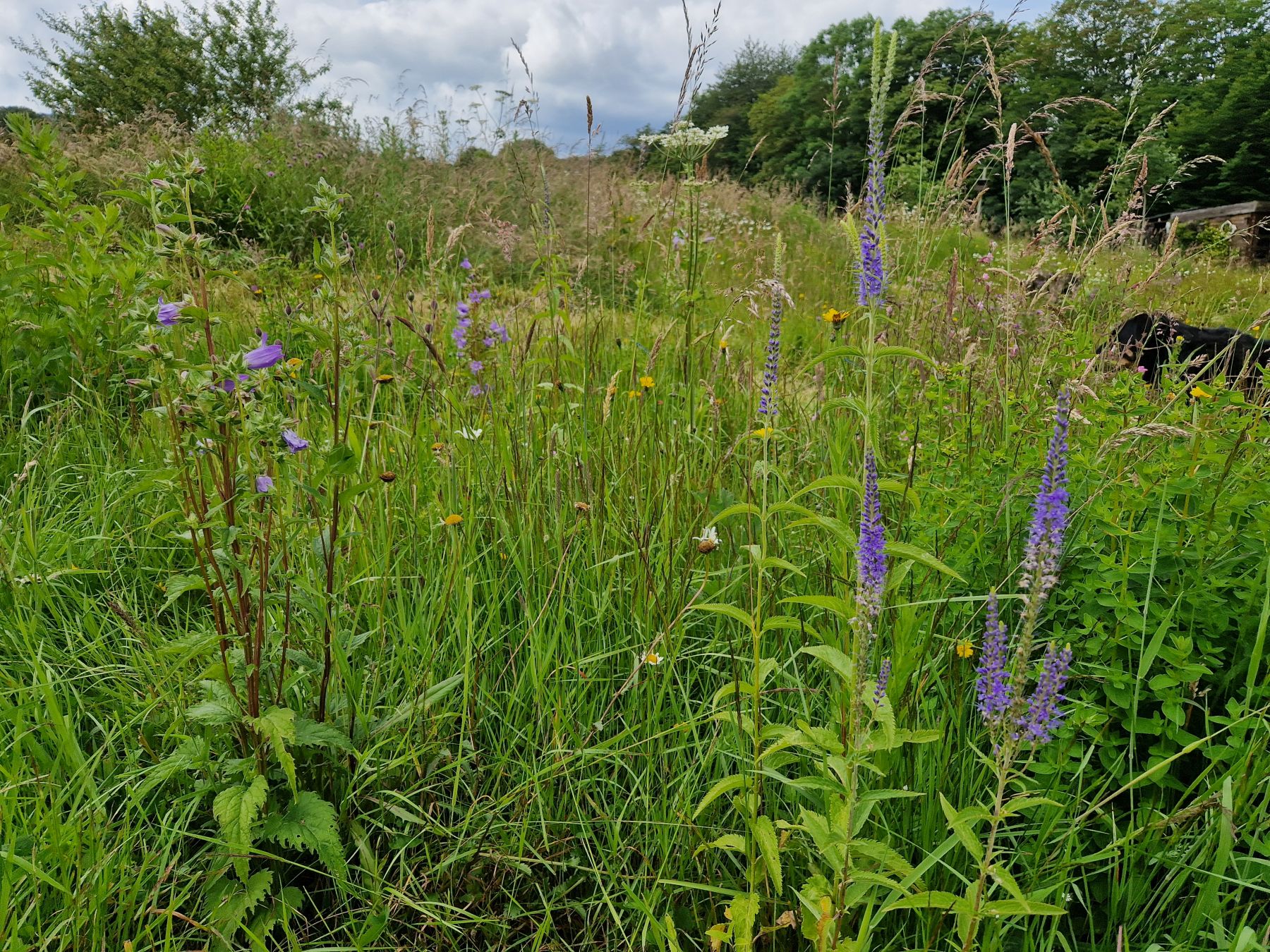
- a hayfield or flower meadow that you let grow long. In species-rich flower meadows, one mowing at the end of the summer is sufficient. On more nutrient-rich fields with still a lot of grass, an extra mowing in May is recommended for more flowering
- a thicket that you only mow once every two years and where nature can fully take its course in a forgotten corner.
The most important thing when mowing is to remove the clippings, as this way you impoverish the soil which then gives more opportunity for flowers among the grasses and less dominant grasses in time. It is also best never to mow off everything at once in your garden because then your insects will no longer find food and shelter, so the rule is always to leave a zone of flowers and long grass somewhere, ideally 20%.
So mow or don't mow? Perhaps that is ultimately the lesson of grass: management makes all the difference. Not cutting everything short, but also not letting everything just happen. Occasional mowing, removing clippings and observing what appears spontaneously often brings more life to the garden than any perfect green carpet. Those who learn to observe will look at grass differently. No longer one big green mass, but a biotope full of character, subtle beauties and, above all, lots of life.
Comments
- dankjewel! een (fijne) uitdaging om het consequent bij te houden... beentjes en armen smeren! (sabine)
- Dankjewel voor deze fijne introductie tot de grassen. Heel bruikbaar voor mij als Tuinranger. Heel helder en aangenaam om te lezen. (Rik)
- Bedankt voor het artikel! Wij hebben 50% van ons gazon laten groeien, de andere 50% wordt wel actief gemaaid. In het begin heel veel paardenbloem, boterbloem en matig hoge grassen, sinds enkele weken veel witbol en hier en daar kropaar. De bedoeling was om dit deze week te maaien maar met het regenweer moet ik het uitstellen.Ons plan was om de grassen te laten groeien, maaien, een dag laten liggen en afvoeren. Op die manier willen we de voedingsstoffen stelselmatig uitputten zodat het gazon schraler wordt en hopelijk binnen 3 jaar meer wilde bloemen. (Gilles en Melissa)
Add a comment